October 10, 11 山形国際ドキュメンタリー映画祭で台湾と日本のホームムービーを上映!
台湾&日本ホームムービー特集 小さな映画、大きな宇宙
- 共催:国家電影及視聴文化中心(TFAI)
ホームムービーとは「家庭の映画」のこと。台湾や日本で、アマチュアカメラマンらが家族を愛情深いまなざしで記録した小型映画を上映する。日本植民地時代の台湾人医師や戦後の台湾人写真家、酒田市の酒蔵社長、山形市の時計店主が撮影した珠玉の映像群が、大正元年に建てられた洋館に甦る。上映中に解説を交えながら、時代や場所を超えて人々をつなぐ“対話のツール”としてのホームムービーの秘められた力を解き放つ。
「台湾ホームムービー」解説・対話:史惟筑/約90分 丁瑞魚による8mm映像(1935-43)、許蒼澤による8mm映像(1960 年代) ●10日、11日 旧吉池医院
「日本ホームムービー」解説・対話:フィルム提供者/約90分 佐藤久吉による8mm・16mm映像(1935-56)、桝谷二郎による8mm映像(1955-70) ●10日、11日 旧吉池医院
「山形×花蓮 1960年代への旅」音楽:林強(リン・チャン)/協力:花蓮影視基地 ●11日 旧吉池医院- 展示:8mm映写機を触ってみよう!
- [日時]10月10日[土]、11日[日]16:00-20:00 [会場]旧吉池医院


Screening Taiwan & Japan Home Movies at Yamagata International Documentary Film Festival!
At the Yamagata International Documentary Film Festival 2025, I had the honor of organizing a special program featuring home movies from Taiwan and Japan.
From Taiwan, we received precious pre-war and 1960s footage. Filmed with love by a Taiwanese physician for his family, these films vividly capture the daily lives of people living in Taiwan during the Japanese colonial era. From Japan, we screened pre-war 8mm films from Sakata and 1960s footage from Yamagata City.
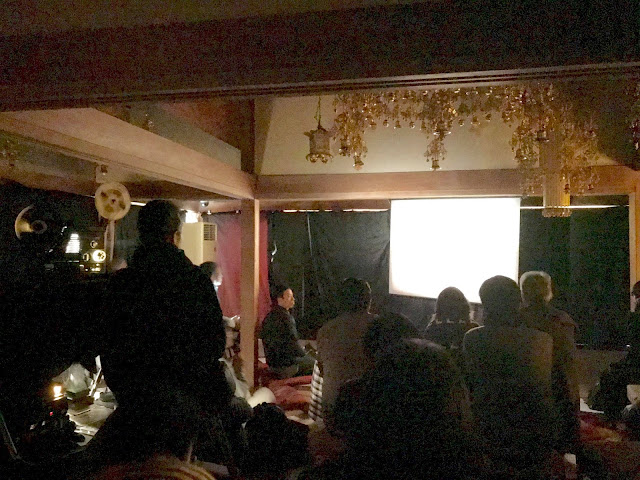
The screening took place at the Former Yoshiike Hospital, an elegant Western-style building constructed in 1912 (Taisho era). On the day of the event, the cozy venue was packed to capacity with standing audience members, filling the room with incredible energy.
Despite a minor projection hiccup, the warm and supportive atmosphere created by the audience turned it into a blissful, heartwarming gathering filled with smiles and gentle laughter—a true reflection of what a home movie screening should be!
We were also honored to invite Dr. Su Ui-Tiok , Associate Professor at National Central University in Taiwan and Board Director of the Women Make Waves Film Festival, to provide live commentary for the colonial-era footage and 1960s family travel films. Her social and cultural insights added remarkable depth and emotion to these personal, intimate films.
Special thanks to Dai Zhougie, Assistant Professor of Sensibility Design at Hachinohe Institute of Technology and film researcher, who had been involved since the initial planning stages and provided seamless, beautiful interpretation in Japanese and Chinese.
In addition, director Sato Koichi—who directed The World’s “Top” Theater after researching an 8-year-old boy appearing in pre-war footage from Sakata and Tsuruoka (who later founded the famous Greenhouse movie theater)—provided insightful and humorous commentary. Ad-lib explanations from local attendees further warmed the hearts of everyone in the room (making it a challenging yet rewarding job for our translator, Ms. Ueda!).
We also screened 8mm footage provided by Mr. Masuya Shuichi , owner of the long-established Masuya Watch Shop in Yamagata City. Interviewed by filmmaker Yajimachi Satoshi (a member of Musashi Fuchu Archivio), the audience warmly felt the deep paternal love captured in the footage.
Realizing this screening inside the Former Yoshiike Hospital—in collaboration with Mr. Shoji Tsutomu, a YIDFF board member and active member of the Modern Architecture Yamagata Museum Executive Committee advocating for the building’s preservation—was a truly moving moment for us.
This endeavor to decode history and culture through home movies became a meaningful exploration of the diverse possibilities surrounding amateur, small-format films. Many attendees expressed a desire to see more, inspiring us to continue nurturing this vision in the future.
Finally, we express our heartfelt gratitude to the Taiwan Film & Audiovisual Institute (TFAI) for co-hosting and dedicating their efforts to bringing this program to life.


%E5%B0%8F1.jpeg)




コメント